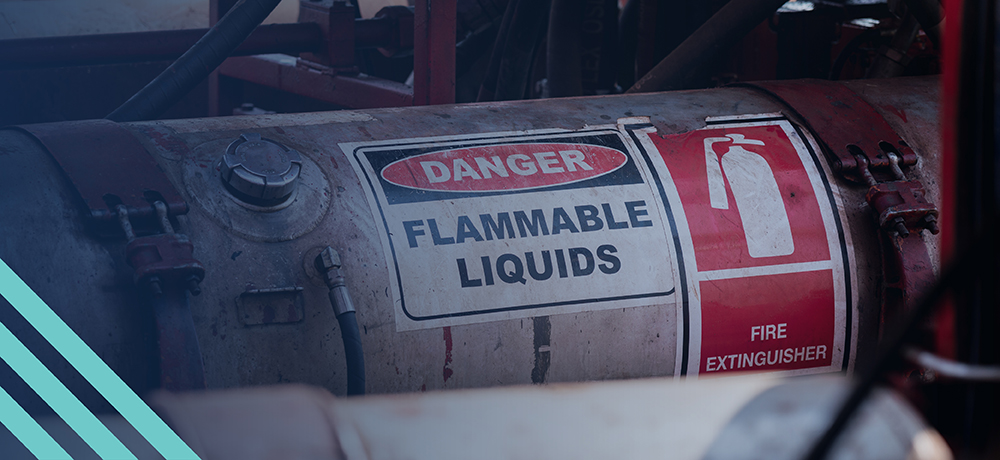
On a construction job site, flammable liquids are often part of the work
Gasoline, solvents, paint thinners, adhesives and similar materials may be used for equipment, cleanup or specific tasks. But when these liquids are stored or handled incorrectly, they can create serious fire, explosion and injury risks.
Just like wearing proper PPE and following site procedures, safe handling of flammable liquids helps protect workers, equipment and the entire job site.
Store flammable liquids safely
Flammable liquids should always be kept in approved containers and cabinets designed for combustible materials. Containers must be tightly sealed when not in use, clearly labeled and stored away from heat, sparks, open flames, electrical equipment or other ignition sources.
Only the amount needed for immediate work should be kept on site. Limiting excess materials reduces risk and helps keep work areas cleaner, safer and easier to manage.
Use proper handling procedures
Workers should never use makeshift containers for flammable liquids. Approved containers are designed to reduce the risk of leaks, spills and vapor release. Containers should not be overfilled, and workers should follow all site requirements when moving or transferring liquids.
When transferring flammable liquids, grounding and bonding procedures may be required to help prevent static electricity buildup. Even a small spark can ignite flammable vapors, so these steps should never be skipped.
Personal protective equipment also matters. Depending on the task, workers may need chemical-resistant gloves, safety goggles, flame-resistant clothing or other approved PPE.
Work in well-ventilated areas
Flammable liquid vapors can build up quickly, especially in enclosed or poorly ventilated spaces. Whenever possible, these materials should be used in well-ventilated areas to help prevent dangerous vapor accumulation.
Ignition sources should be kept far away from any area where flammable liquids are being stored, transferred or used. Smoking, welding, open flames, hot work and certain electrical equipment can all create serious hazards when flammable vapors are present.
Fire extinguishers rated for Class B fires should be nearby and easy to access. Workers should also know where extinguishers are located and how to respond in an emergency.
Be prepared for spills
Spills should be addressed immediately. Spill kits should be available in areas where flammable liquids are stored or used, and workers should be trained on how to respond safely.
Spilled liquids should be contained with approved absorbent materials and disposed of properly according to site procedures. Contaminated materials should never be left in work areas, and flammable liquid spills should not be washed into drains, sewers or soil.
A fast response can help prevent a small spill from becoming a much larger safety issue.
Keep training and awareness top of mind
Workers should be trained on the hazards of flammable liquids, safe storage and handling procedures, proper PPE use and emergency response steps. Safety signs should be posted where flammable liquids are stored or used, and workers should be encouraged to report unsafe conditions right away.
Supervisors and crew members should also make sure containers remain labeled, storage areas stay organized and ignition sources are controlled throughout the workday.
Safety starts with proper handling
Flammable liquids are common on construction sites, but they should never be treated casually. Proper storage, careful handling, ventilation, spill response and worker training all help reduce the risk of fires, explosions and injuries.
When crews follow site procedures and stay aware of the hazards, they help protect themselves and everyone around them.
Prioritize safety at all times
Questions or concerns about your safety on the job? Please call your local PRST team. You can also learn more about our safety policies on our Tradesperson Resource Center.